

OUK HOSTS PROSPER WORKSHOP TO ADVANCE VIRTUAL MOBILITY AND DIGITAL COLLABORATION IN HIGHER EDUCATION
Konza Technopolis, Kenya – April 2026
The Open University of Kenya (OUK) successfully hosted a key workshop under the Erasmus+-funded PROSPER Project, bringing together higher education leaders, digital learning experts and international partners to develop practical frameworks for virtual mobility and digital collaboration across universities in Kenya and Europe.
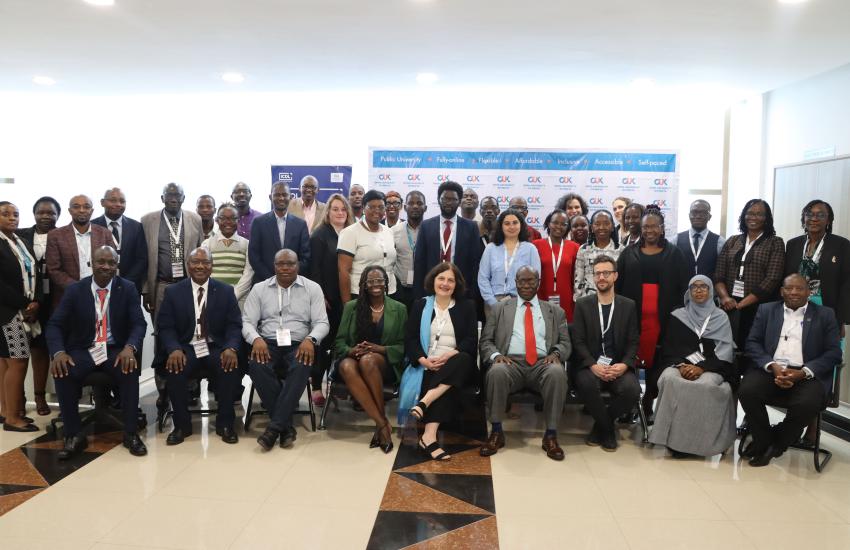
Held at Konza Technopolis on 30–31 March 2026, the Work Package 4 (WP4) workshop convened more than 30 participants from five partner institutions: the Open University of Kenya, the University of Eldoret, the European University Viadrina (Germany), Paris 1 Panthéon-Sorbonne University (France) and the Training Centre in Communication (TCC Africa).
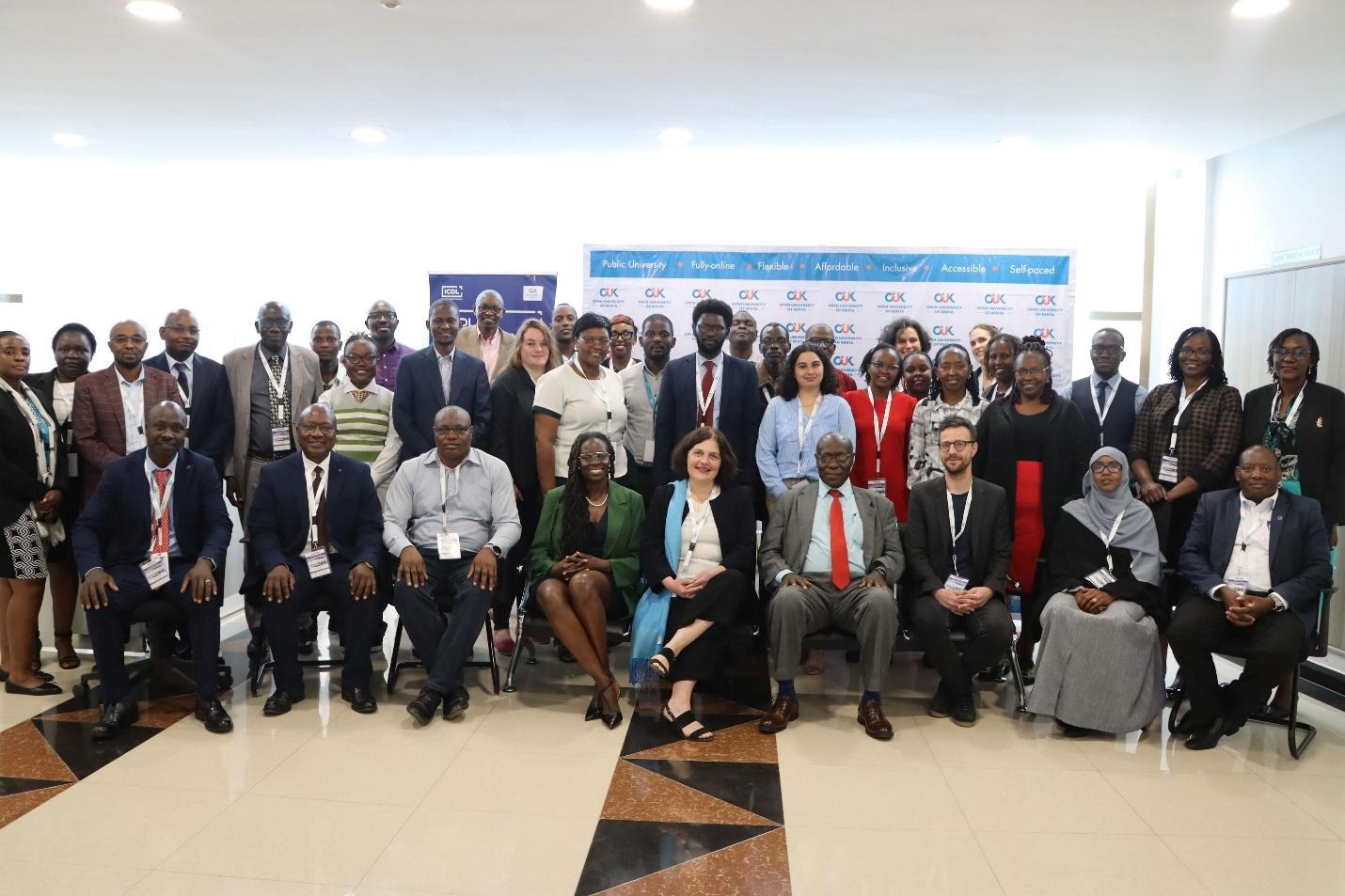
Participants at the second PROSPER capacity-building workshop, Open University of Kenya, Konza Technopolis, March 2026.
The workshop marked a significant shift from assessing existing digital capacities to designing actionable solutions that will support internationalisation, virtual mobility and cross-border learning opportunities. Participants focused on developing shared standards, institutional frameworks and implementation pathways for digitally enabled academic collaboration.
The workshop forms part of the broader PROSPER Project—Promoting Opportunities and Strengthening Partnerships for Enhanced Internationalisation between Europe and Kenya—which seeks to strengthen the global presence of Kenyan universities through capacity building, institutional development and enhanced international partnerships. The project is co-funded by the Erasmus+ Programme of the European Union and runs from 2025 to 2028. Its overarching goal is to strengthen cooperation frameworks, institutionalise internationalisation best practices and foster a culture of innovation and global engagement within Kenyan higher education institutions.
A major outcome of the workshop was the identification of Collaborative Online International Learning (COIL) as the most practical and immediate pathway for virtual mobility. Through COIL, students from partner universities will be able to participate in shared online courses taught by instructors from different institutions while earning academic credits through their home universities.
Participants also conducted a comprehensive mapping of their digital ecosystems and found strong common ground through the widespread use of Moodle learning management systems, Zoom conferencing platforms, Google Workspace collaboration tools and Mahara ePortfolios. However, they also identified challenges related to internet connectivity, fragmented digital systems, authentication barriers and the absence of shared repositories for learning resources.
To address these issues, three Partnership Action Learning (PAL) working groups developed concrete six-month deliverables in the areas of Academic Policy, Pedagogy and IT Infrastructure.
The Academic Policy group proposed a framework for credit recognition, joint course governance and cross-institutional teaching incentives, including the identification of a pilot COIL course and the development of a formal credit transfer mechanism.
The Pedagogy group developed a framework for inclusive online learning and committed to co-creating a three-month Certificate in Digital Entrepreneurship and Digital Tools for staff and students across partner institutions.
Meanwhile, the IT Infrastructure group produced a roadmap for interoperability, focusing on federated identity management, secure data sharing, API integration and compliance with both the Kenya Data Protection Act and the European Union’s General Data Protection Regulation (GDPR).
One of the workshop’s most innovative sessions involved a “Crisis Lab,” where participants tested the proposed Virtual Mobility Framework against realistic scenarios, including authentication failures and grading disputes. The exercise resulted in the development of practical protocols aimed at ensuring resilience, institutional autonomy and smooth cross-border collaboration.
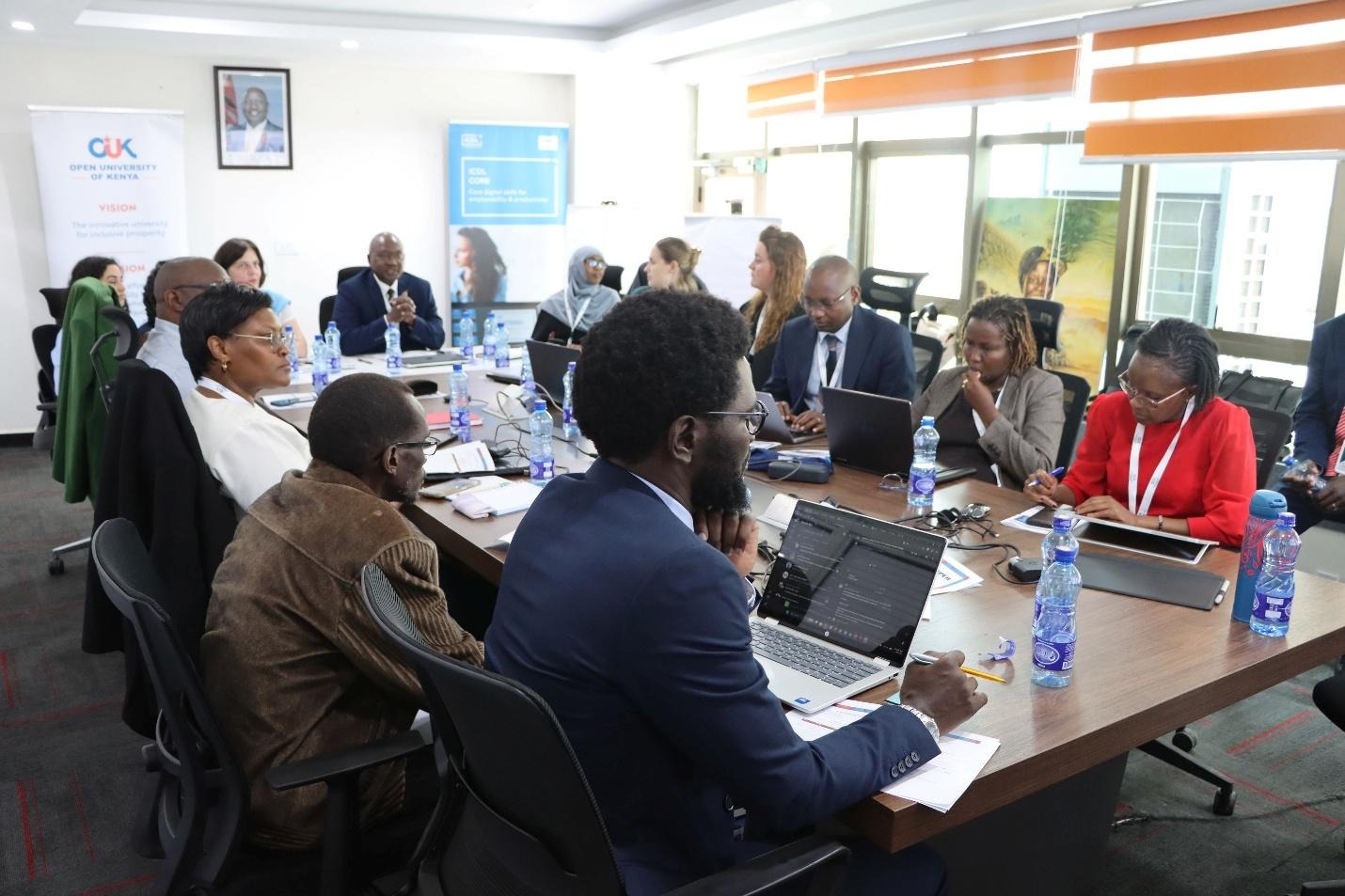
Sessions explored digital collaboration and virtual mobility frameworks for Kenyan universities.
Throughout the discussions, five recurring themes emerged as guiding principles for future implementation: the responsible use of artificial intelligence, inclusive digital design, stronger links between technology and pedagogy, data sovereignty and sustainable investment in digital infrastructure.
The workshop also reinforced OUK’s growing reputation as a digital-first institution. Among the notable achievements highlighted were the creation of three cross-institutional collaboration frameworks, the establishment of a six-month accountability structure through the PAL groups and the initiation of new partnerships, including collaboration opportunities between OUK and the University of Eldoret’s mHub innovation ecosystem.
According to the workshop outcomes, the next phase will focus on refining the PAL deliverables, advancing interoperability efforts, identifying pilot COIL courses and presenting progress at the forthcoming PROSPER consortium plenary hosted by the European University Viadrina.
As the PROSPER Project enters a new phase of implementation, the workshop demonstrated how universities can move beyond discussions and towards practical, scalable solutions that expand access, strengthen international partnerships and prepare institutions for the future of higher education. The outcomes provide a blueprint for enhancing digital collaboration and virtual mobility while positioning Kenyan universities as active participants in the global academic community.